

Read our Spring 2026 newsletter here.
Blog
Philosophy, No Homework Required
With the Analytic Salon, the Graduate Center’s Saul Kripke Center is bringing analytic philosophy out of the seminar room and into the public discourse. Read the news story here.
New Visiting Scholar: Emils Zavelis
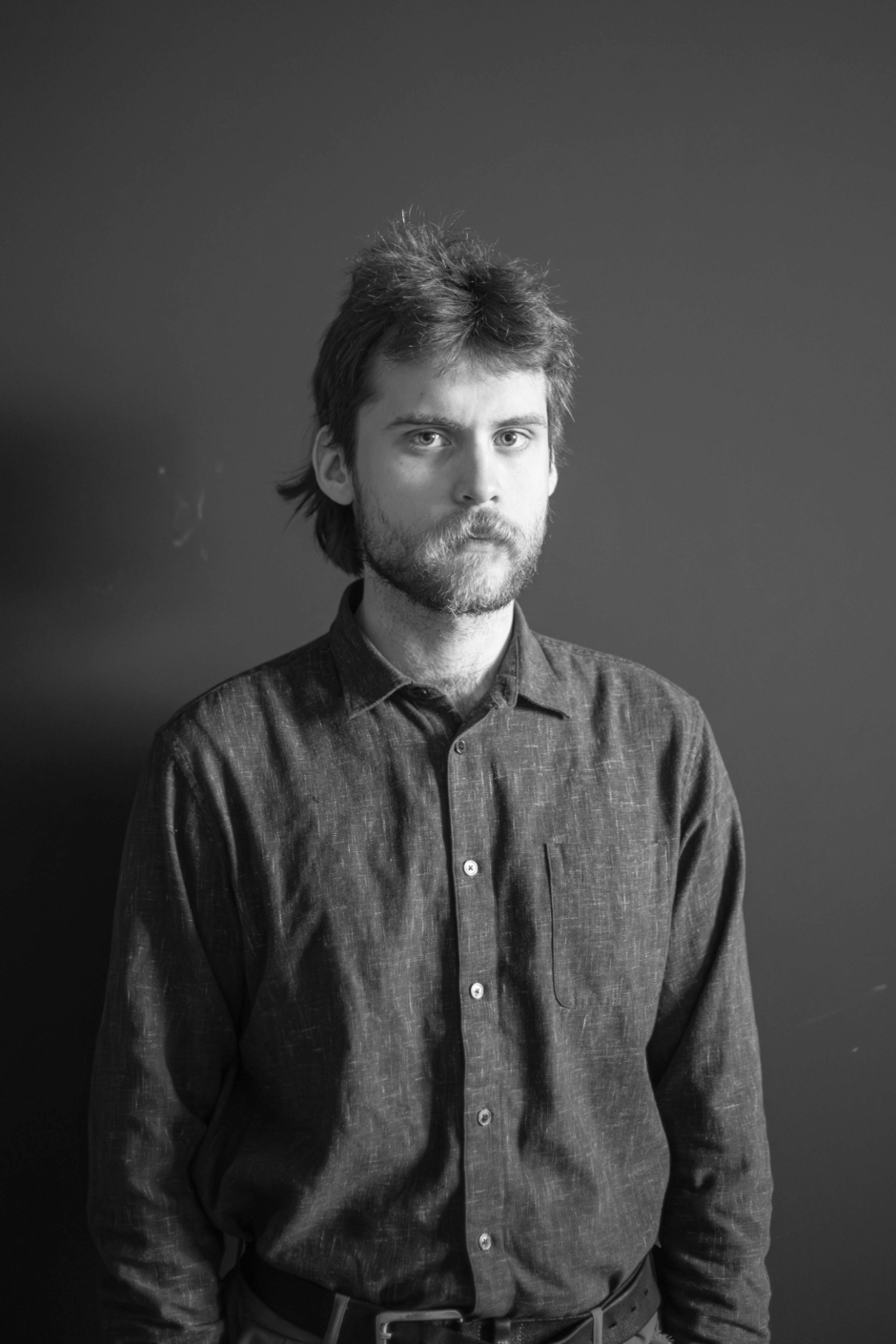
Emils Zavelis (PhD researcher, University of Vienna) joins the Saul Kripke Center for a two month visit in Spring 2026. His research mainly concerns logical metatheories for nonclassical logics, and philosophy of logic more broadly.
The Analytic Salon
The Saul Kripke Center is starting a new public philosophy initiative: The Analytic Salon. Learn more about it, and get involved, here.
Inhabiting Kripke’s truth via a working paracomplete formal arithmetic
The Saul Kripke Center is pleased to announce that Bryan Alexander Ford (DEDIS, EPFL) will deliver a talk on Monday, March 23rd, 2026, from 10:00 am to 12:00 pm at the CUNY Graduate Center (Room 9205). The talk is free and open to all.
Title: Inhabiting Kripke’s truth via a working paracomplete formal arithmetic
Abstract: While Kripke inspired numerous alternative approaches to truth and paradox, could we accomplish something like ordinary “working mathematical reasoning” in any of them? Yes. Grounded arithmetic (GA) combines paracomplete reasoning and computational semantics into a concrete, usable, and powerful Peano-esque formal theory of natural numbers and computation. GA weakens key classical inference rules with “habeas quid” preconditions: obligations to prove we “have a thing” before using it in subsequent reasoning. In reward for this inconvenience, GA permits unconstrained recursive definitions of both functions and predicates, including traditional classical and intuitionistic paradoxes like the Liar or Curry’s, but also including useful constructs like a simple mutually-recursive formulation of Cantor pairings. GA includes powerful quantifiers that yield a natural resolution of Yablo’s paradox. In contrast with classical arithmetic, all of GA’s logical connectives including quantifiers reduce to ordinary computations in basic grounded arithmetic (BGA), a minimalistic formal foundation for recursive computation. A mechanically-checked metatheory development shows that BGA has properties defying the conventional interpretation of Gödel’s incompleteness theorems by being simultaneously (a) semantically and syntactically consistent, (b) semantically complete, and (c) sufficiently powerful to represent any recursive (Turing-complete) computation. Ongoing work reinterpreting classical results from this Kripke-inspired paracomplete perspective suggests that Cantor’s theorem may have (always) been a “paradox in hiding” and that the Axiom of Choice may have been blameless for the Banach-Tarski paradox.
Young Scholars Series: David Santamaria Legarda
The Saul Kripke Center is pleased to announce that David Santamaria Legarda (PhD student, Philosophy, CUNY Graduate Center) will deliver the eleventh Saul Kripke Center Young Scholars Series talk on Wednesday, February 25, 2026, from 11:45 am to 1:45 pm at the CUNY Graduate Center (Room 9206). The talk is free and open to all.
Title: Cantor’s notion of inconsistent multiplicity
Abstract: In this talk I will (i) discuss the distinction between the so-called consistent and inconsistent multiplicities that we find in Georg Cantor’s (1845-1918) set theory. I will then (ii) examine whether Cantor’s theory was vulnerable to the paradoxes of set theory at any stage in its development and (iii) evaluate the claim that inconsistent multiplicities were introduced by Cantor in an ad hoc fashion to resolve these paradoxes. I will also (iv) look at the use Cantor makes of inconsistent multiplicities in his alleged proof that every set can be well-ordered, (v) defend Saul Kripke’s (1940–2022) claim that Cantor’s proof in his letters is successful, and (vi) draw some conclusions as to why he did not publish this proof.
Debating Dynamic Semantics
The Saul Kripke Center is hosting a two-day conference in the philosophy of language and logic, focused on dynamic semantics, especially as it pertains to modality. Both junior and senior experts will debate approaches to dynamic semantics.
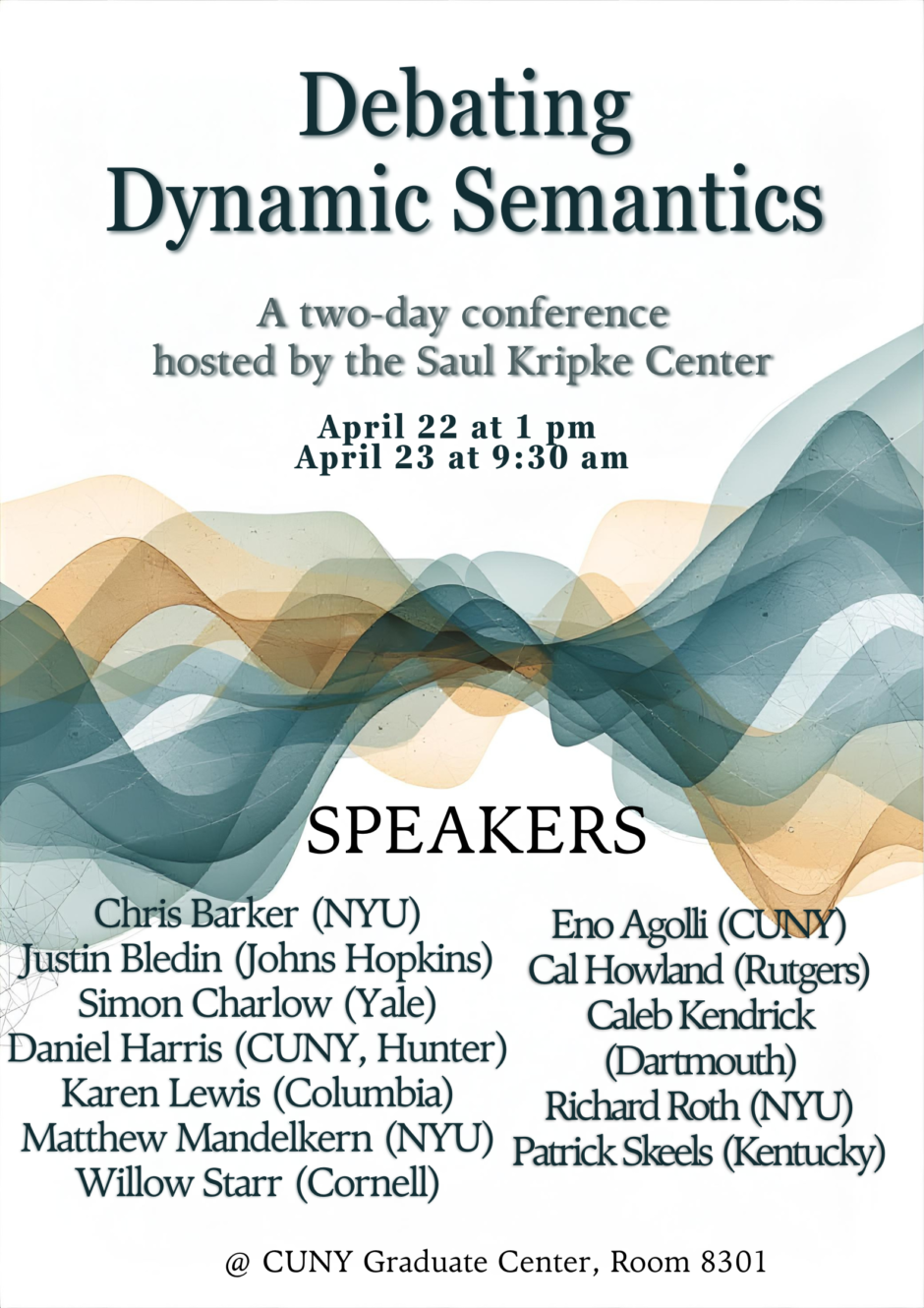
The conference will be organized as an exclusively in-person event. Attendance is open, without registration or cost, to anyone who is interested (Building Entry Policy). The conference program is available here.
Note: There is an associated call for papers here.
New Book Contract: Beyond the Outline
Following the great Beyond the Outline conference held at the CUNY Graduate Center this past November, the Saul Kripke Center is pleased to announce that a proceedings for the conference is in contract with Springer. The volume, entitled Beyond the Outline: A Celebration of Fifty Years of Kripke on Truth, is being edited by Yale Weiss and Eno Agolli.
New Visiting Scholar: Rashed Ahmad
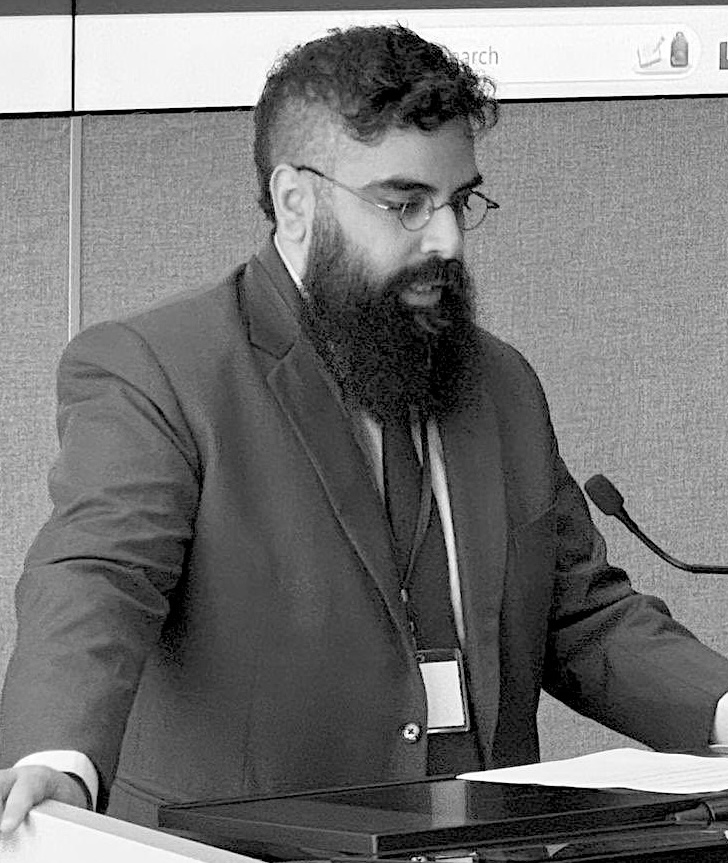
Rashed Ahmad (PhD, University of Connecticut), Assistant Professor in the Philosophy department at Kuwait University, joins the Saul Kripke Center as a Visiting Research Scholar for 2026. His research mainly concerns substructural logics (primarily Refllexive-free and Transitive-free logics) and issues of internalization, including semantic and soritical paradoxes and ω-inconsistency.
New Visiting Scholar: Giuliano Rosella
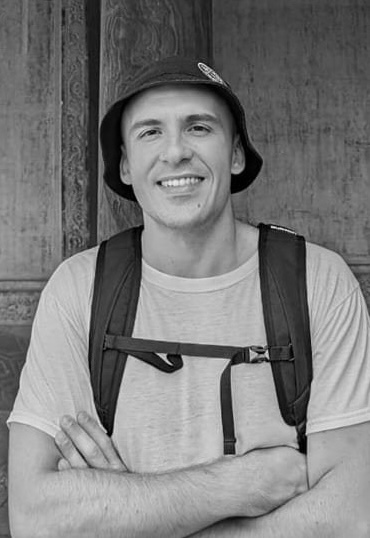
Giuliano Rosella (PhD, LLC-University of Turin), post-doctoral researcher at the Center for Logic, Language and Cognition, in the Department of Philosophy – University of Turin, joins the Saul Kripke Center as a Visiting Research Scholar for Fall 2025. His research mainly concerns the logic and probability of conditionals, algebraic logic, and formal epistemology.

